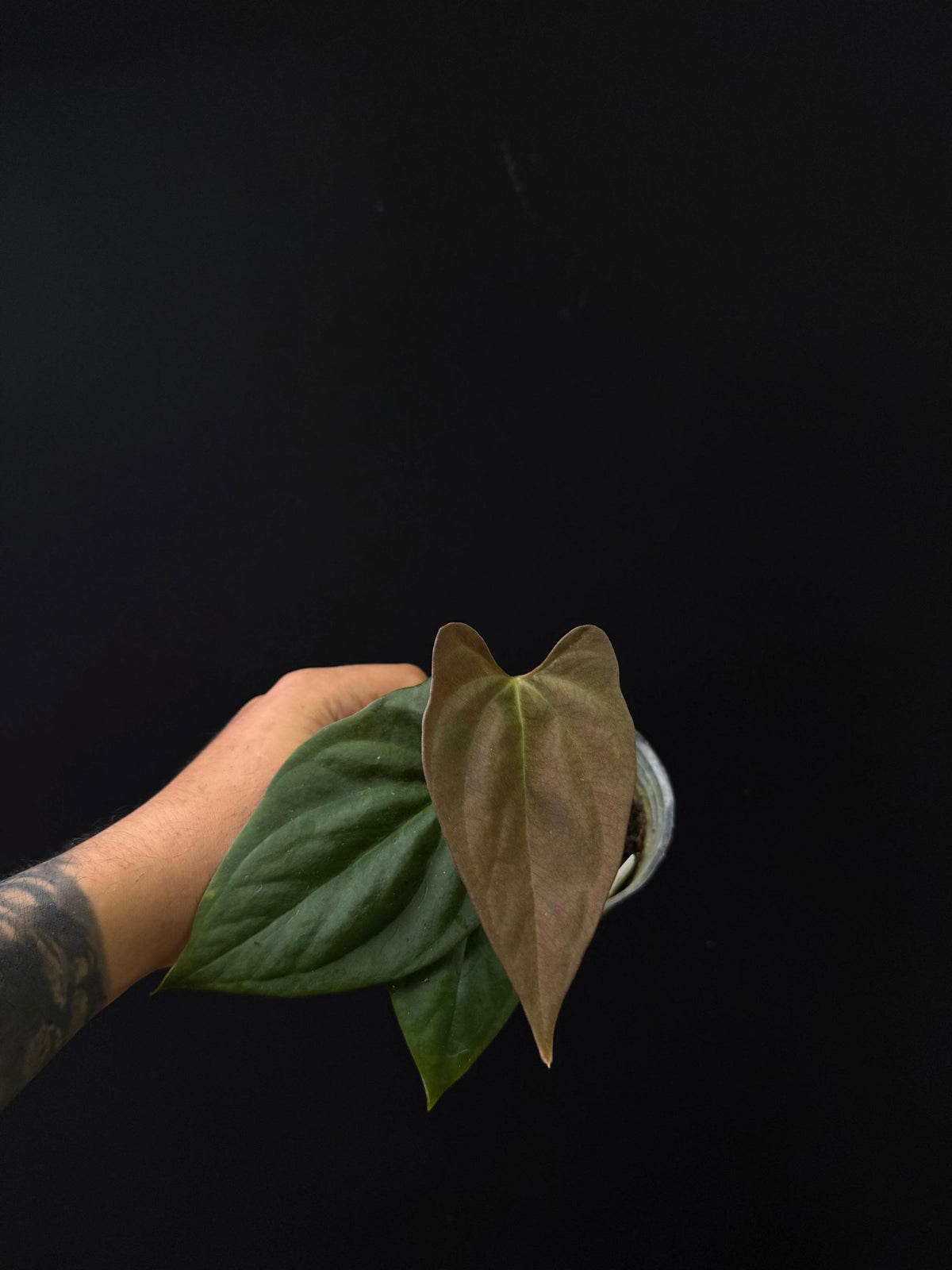
Anthurium portillae 'NSE' (clone from TC)
Anthurium portillae ‘NSE’ Clone (Tissue Culture)
Anthurium portillae ‘NSE’ is a distinctive foliage Anthurium known for its elongated leaves, subtle venation, deep mature coloration, and beautifully bronzed emergent growth. This particular plant is a clonal propagation produced through tissue culture, preserving the genetics of the selected NSE clone rather than representing a seed grown variation.
Juvenile plants can begin with broader, simpler foliage, but the characteristic shape becomes increasingly apparent as the plant matures. New leaves may emerge in bronze, copper, olive, or reddish brown tones before gradually hardening into deeper green.
The NSE designation is associated with Natural Selection Exotics and the Anthurium material distributed through Enid Offolter’s breeding and propagation program. The NSE portillae clone is also documented in cultivation and breeding under the NSE name.
What You’ll Receive
One live Anthurium portillae ‘NSE’ clone produced through tissue culture.
Your plant will be carefully packed to help protect the foliage, root system, and active growing point during transit.
Plant Highlights
Elongated mature foliage
Bronze to copper emergent leaves
Deep green hardened foliage
Subtle contrasting venation
Selected NSE genetics
Clonally propagated through tissue culture
Upright growth habit
Leaf shape becomes increasingly defined with maturity
Light
Provide medium to bright indirect light.
Bright filtered light encourages healthy growth, stronger leaf development, and progressively larger foliage. Avoid prolonged harsh direct sunlight, particularly during the hottest part of the day.
Water
Water thoroughly once the upper portion of the growing media begins to dry.
Keep the root zone consistently lightly moist without allowing it to remain constantly saturated. Allow excess water to drain freely after watering.
Avoid repeated periods of complete dryness, particularly while new foliage is actively developing.
Humidity
Moderate to high humidity is preferred.
Humidity around 60 percent or higher can help encourage smooth leaf emergence and healthy foliage development.
Higher humidity is especially helpful while new leaves are expanding, but good airflow should accompany elevated humidity.
Growing Media
Use a chunky, airy, well draining Anthurium mix that retains some moisture while maintaining plenty of oxygen around the roots.
A combination of tree fern fiber, orchid bark, coco chips, pumice, perlite, and coco coir works well.
Avoid dense growing media that remains saturated for extended periods.
Temperature
Warm temperatures are ideal, generally around 65 to 85°F.
Protect from frost, cold drafts, and prolonged exposure to temperatures below approximately 55°F.
Consistent warmth generally encourages stronger root development and more regular leaf production.
Airflow
Provide gentle airflow, particularly when growing in elevated humidity.
Good circulation helps prevent stagnant moisture around the foliage and root zone while still allowing the plant to benefit from humid conditions.
Fertilizer
Feed lightly and consistently during active growth using a diluted balanced fertilizer.
Regular light feeding can support healthy root development and progressively larger foliage.
Periodically flushing the growing media can help prevent fertilizer salts from accumulating around the roots.
Growth Habit
Anthurium portillae develops from a central growth point and can produce increasingly elongated foliage as it matures.
Juvenile tissue culture plants may initially produce foliage that looks somewhat different from the mature clone. Successive leaves generally become larger and more representative of the mature genetics as the plant establishes a stronger root system.
Emergent Color
New growth is one of the especially attractive characteristics of this plant.
Fresh leaves may emerge bronze, copper, olive brown, or reddish before gradually transitioning toward deeper green as they expand and harden.
New Anthurium foliage is extremely soft while developing, so avoid unnecessary handling until the leaf has fully hardened.
About the Tissue Culture Clone
This plant is not a seedling cross. It was clonally propagated through tissue culture from the selected Anthurium portillae ‘NSE’ genetics.
Unlike seed grown offspring, which receive a different genetic combination from two parents, tissue cultured plants are produced to maintain the genetics of the original clone.
Young tissue culture plants can still vary somewhat in appearance due to age, growing conditions, and juvenile growth. The characteristic mature foliage becomes increasingly apparent as the plant develops.
Anthurium portillae ‘NSE’ combines bronzed emergent growth, elongated mature foliage, and established clonal genetics into a plant that becomes increasingly impressive as it progresses from juvenile growth into its mature form.
------
⚠️ Important Shipping Notes
We take great care to ensure your plant arrives safely:
• We ship every Monday and Tuesday to minimize weekend delays.
• We check destination weather on Sunday night and will add free insulation and heat packs when needed for safe delivery.
• If a plant arrives damaged, buyers must provide an unboxing video within one hour of delivery.
(We cannot be responsible for plants left outside, delayed opening, or packages exposed to heat/cold.)
🌟 Perfect For:
• Rare plant collectors
• Fans of unusual foliage
• Terrarium or greenhouse keepers
• Anyone building a unique indoor jungle
Exported By ExportYourStore
Listed with ExportYourStore.com
Anthurium portillae ‘NSE’ is a distinctive foliage Anthurium known for its elongated leaves, subtle venation, deep mature coloration, and beautifully bronzed emergent growth. This particular plant is a clonal propagation produced through tissue culture, preserving the genetics of the selected NSE clone rather than representing a seed grown variation.
Juvenile plants can begin with broader, simpler foliage, but the characteristic shape becomes increasingly apparent as the plant matures. New leaves may emerge in bronze, copper, olive, or reddish brown tones before gradually hardening into deeper green.
The NSE designation is associated with Natural Selection Exotics and the Anthurium material distributed through Enid Offolter’s breeding and propagation program. The NSE portillae clone is also documented in cultivation and breeding under the NSE name.
What You’ll Receive
One live Anthurium portillae ‘NSE’ clone produced through tissue culture.
Your plant will be carefully packed to help protect the foliage, root system, and active growing point during transit.
Plant Highlights
Elongated mature foliage
Bronze to copper emergent leaves
Deep green hardened foliage
Subtle contrasting venation
Selected NSE genetics
Clonally propagated through tissue culture
Upright growth habit
Leaf shape becomes increasingly defined with maturity
Light
Provide medium to bright indirect light.
Bright filtered light encourages healthy growth, stronger leaf development, and progressively larger foliage. Avoid prolonged harsh direct sunlight, particularly during the hottest part of the day.
Water
Water thoroughly once the upper portion of the growing media begins to dry.
Keep the root zone consistently lightly moist without allowing it to remain constantly saturated. Allow excess water to drain freely after watering.
Avoid repeated periods of complete dryness, particularly while new foliage is actively developing.
Humidity
Moderate to high humidity is preferred.
Humidity around 60 percent or higher can help encourage smooth leaf emergence and healthy foliage development.
Higher humidity is especially helpful while new leaves are expanding, but good airflow should accompany elevated humidity.
Growing Media
Use a chunky, airy, well draining Anthurium mix that retains some moisture while maintaining plenty of oxygen around the roots.
A combination of tree fern fiber, orchid bark, coco chips, pumice, perlite, and coco coir works well.
Avoid dense growing media that remains saturated for extended periods.
Temperature
Warm temperatures are ideal, generally around 65 to 85°F.
Protect from frost, cold drafts, and prolonged exposure to temperatures below approximately 55°F.
Consistent warmth generally encourages stronger root development and more regular leaf production.
Airflow
Provide gentle airflow, particularly when growing in elevated humidity.
Good circulation helps prevent stagnant moisture around the foliage and root zone while still allowing the plant to benefit from humid conditions.
Fertilizer
Feed lightly and consistently during active growth using a diluted balanced fertilizer.
Regular light feeding can support healthy root development and progressively larger foliage.
Periodically flushing the growing media can help prevent fertilizer salts from accumulating around the roots.
Growth Habit
Anthurium portillae develops from a central growth point and can produce increasingly elongated foliage as it matures.
Juvenile tissue culture plants may initially produce foliage that looks somewhat different from the mature clone. Successive leaves generally become larger and more representative of the mature genetics as the plant establishes a stronger root system.
Emergent Color
New growth is one of the especially attractive characteristics of this plant.
Fresh leaves may emerge bronze, copper, olive brown, or reddish before gradually transitioning toward deeper green as they expand and harden.
New Anthurium foliage is extremely soft while developing, so avoid unnecessary handling until the leaf has fully hardened.
About the Tissue Culture Clone
This plant is not a seedling cross. It was clonally propagated through tissue culture from the selected Anthurium portillae ‘NSE’ genetics.
Unlike seed grown offspring, which receive a different genetic combination from two parents, tissue cultured plants are produced to maintain the genetics of the original clone.
Young tissue culture plants can still vary somewhat in appearance due to age, growing conditions, and juvenile growth. The characteristic mature foliage becomes increasingly apparent as the plant develops.
Anthurium portillae ‘NSE’ combines bronzed emergent growth, elongated mature foliage, and established clonal genetics into a plant that becomes increasingly impressive as it progresses from juvenile growth into its mature form.
------
⚠️ Important Shipping Notes
We take great care to ensure your plant arrives safely:
• We ship every Monday and Tuesday to minimize weekend delays.
• We check destination weather on Sunday night and will add free insulation and heat packs when needed for safe delivery.
• If a plant arrives damaged, buyers must provide an unboxing video within one hour of delivery.
(We cannot be responsible for plants left outside, delayed opening, or packages exposed to heat/cold.)
🌟 Perfect For:
• Rare plant collectors
• Fans of unusual foliage
• Terrarium or greenhouse keepers
• Anyone building a unique indoor jungle
Exported By ExportYourStore
Listed with ExportYourStore.com
Anthurium portillae 'NSE' (clone from TC)
Sale price$49.00
Regular price (/)