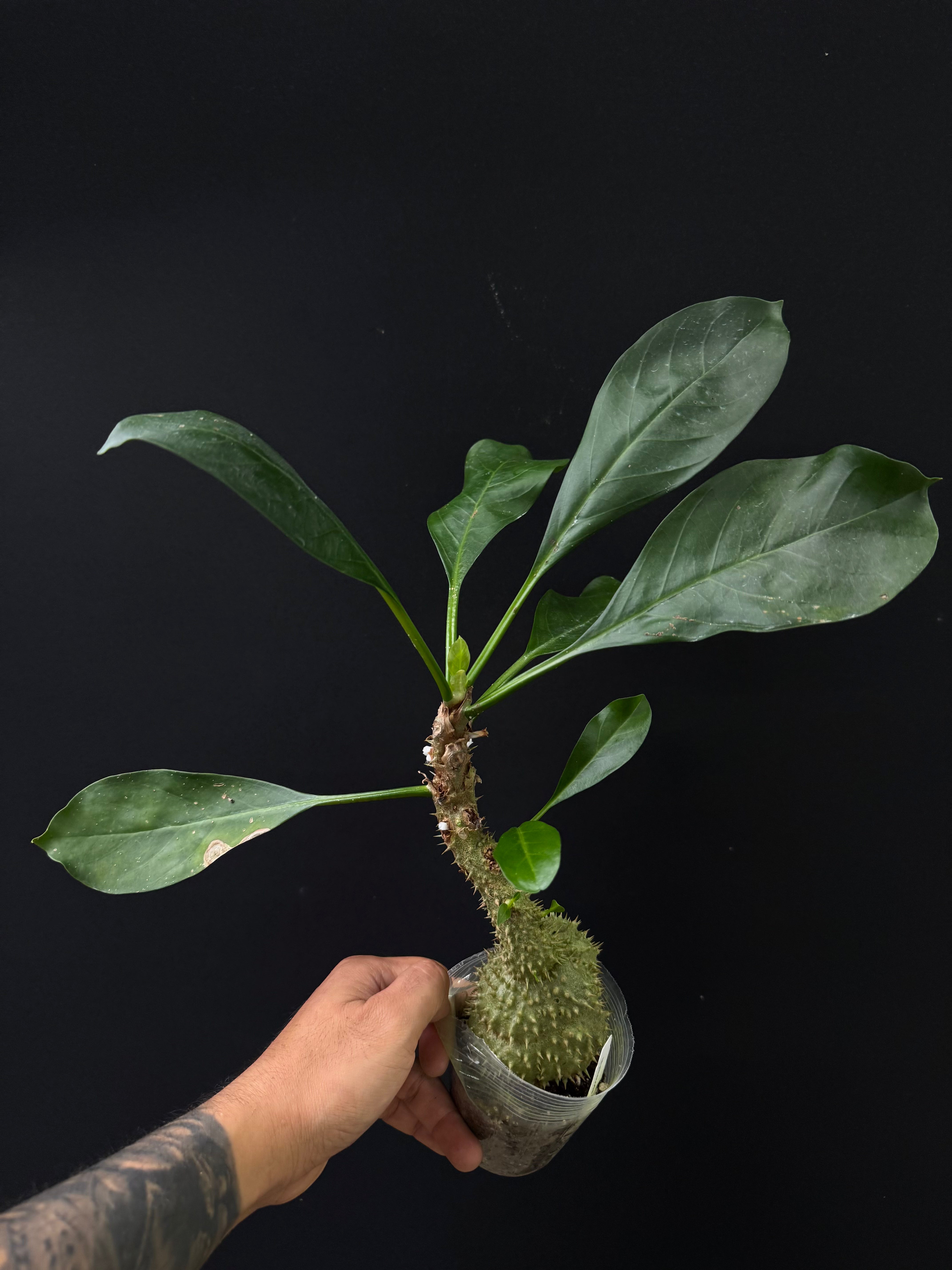
Myrmecodia tuberosa Papua • Rare Ant Plant
Myrmecodia tuberosa ‘Papua’ – Ant Plant
Myrmecodia tuberosa ‘Papua’ is an unusual tropical epiphyte best known for its swollen, spiny caudex and fascinating natural relationship with ants. Often called an Ant Plant, Myrmecodia develops a thickened base containing a network of internal chambers that provide shelter for ants in its native habitat.
The plant itself has an almost sculptural appearance, with a textured caudex supporting an upright stem topped with glossy green foliage. As it matures, the caudex continues to enlarge and develop increasingly pronounced bumps, ridges, and spines, making older specimens especially impressive.
The Papua designation refers to this plant’s geographic form or collection lineage associated with the Papua region.
What You’ll Receive
One live Myrmecodia tuberosa ‘Papua’ plant.
Your plant will be carefully packed to help protect the foliage, caudex, root system, and active growing points during transit.
Plant Highlights
Distinctive swollen caudex
Naturally develops internal chambers
Spiny and heavily textured mature base
Glossy green foliage
Epiphytic growth habit
Fascinating natural ant symbiosis
Caudex becomes increasingly dramatic with maturity
Excellent specimen plant for warm tropical growing conditions
Light
Provide bright indirect light to bright filtered light.
Myrmecodia generally appreciates more light than many understory tropical plants. Strong filtered light encourages compact growth and healthy caudex development.
Gentle morning sun can be beneficial, but protect the plant from prolonged intense afternoon sun, particularly in hot climates.
Water
Water thoroughly and then allow the growing media to partially dry before watering again.
Myrmecodia is adapted to an epiphytic lifestyle and does not appreciate constantly saturated roots. Good drainage and oxygen around the root system are extremely important.
Avoid allowing the plant to remain completely dry for extended periods while actively growing, but do not treat it like a moisture loving terrestrial plant.
Humidity
Moderate to high humidity is preferred.
Humidity around 50 to 70 percent or higher can support healthy foliage and root development.
Established plants can tolerate some fluctuation in humidity when watering, temperature, and airflow remain consistent.
Growing Media
Use an extremely airy, fast draining epiphytic mix.
Orchid bark, coco chips, coarse perlite, pumice, tree fern fiber, and small amounts of sphagnum moss can all be used.
The goal is to provide moisture without sacrificing airflow around the roots.
The swollen caudex should remain above the growing media rather than being buried.
Myrmecodia can also be grown mounted or in baskets where its epiphytic growth habit can be displayed naturally.
Temperature
Warm temperatures are ideal, generally around 65 to 90°F.
Protect from frost and prolonged exposure to cool temperatures.
Consistently warm conditions encourage stronger growth and more active root development.
Airflow
Good airflow is especially important.
Because Myrmecodia prefers both warmth and humidity, gentle air movement helps prevent stagnant moisture from remaining around the roots and caudex.
This is particularly important when growing the plant in a greenhouse or enclosed growing environment.
Fertilizer
Feed lightly during active growth using a diluted balanced fertilizer.
Because this species naturally grows as an epiphyte with access to relatively small amounts of nutrients, heavy fertilization is unnecessary.
Regular light feeding is preferable to strong fertilizer applications.
Growth Habit
Myrmecodia tuberosa is an epiphytic caudiciform plant.
The swollen base is technically a modified stem rather than a traditional underground storage tuber. As the plant matures, this caudex enlarges and develops an increasingly complex internal network of chambers.
An upright stem grows from the caudex and produces clusters of green leaves toward the upper portion of the plant.
About the Caudex
The caudex is the defining feature of Myrmecodia.
Young plants begin with a relatively small swollen base that gradually enlarges as the plant matures. The exterior becomes increasingly textured and can develop pronounced bumps, ridges, and spines.
Inside the caudex is an interconnected system of hollow chambers and tunnels.
Do not bury the caudex when repotting. Keeping it exposed helps showcase the plant’s natural structure while reducing the likelihood of excess moisture remaining against the swollen base.
Why It Is Called an Ant Plant
In the wild, Myrmecodia forms a fascinating relationship with ants.
The hollow chambers inside the caudex provide ants with protected living space. In return, nutrients from material deposited within those chambers can become available to the plant.
This relationship is known as myrmecophytism, a specialized association between plants and ants.
Ants are not required to successfully grow Myrmecodia in cultivation.
Mature Growth
As Myrmecodia tuberosa matures, the caudex can become substantially larger and more architectural while the stem continues developing above it.
Older specimens can look almost bonsai like, combining a thick sculptural base with an upright trunk and crown of foliage.
Myrmecodia tuberosa ‘Papua’ combines tropical foliage, caudiciform growth, and one of the plant world’s most fascinating natural adaptations into a specimen that becomes increasingly unusual and impressive with age.
⸻
⚠️ Important Shipping Notes
• We ship every Monday and Tuesday.
• Weather is reviewed Sunday night — free insulation/heat packs added when needed.
• An unboxing video within one hour of delivery is required for any damage claims.
(We are not responsible for packages left outside or opened late.)