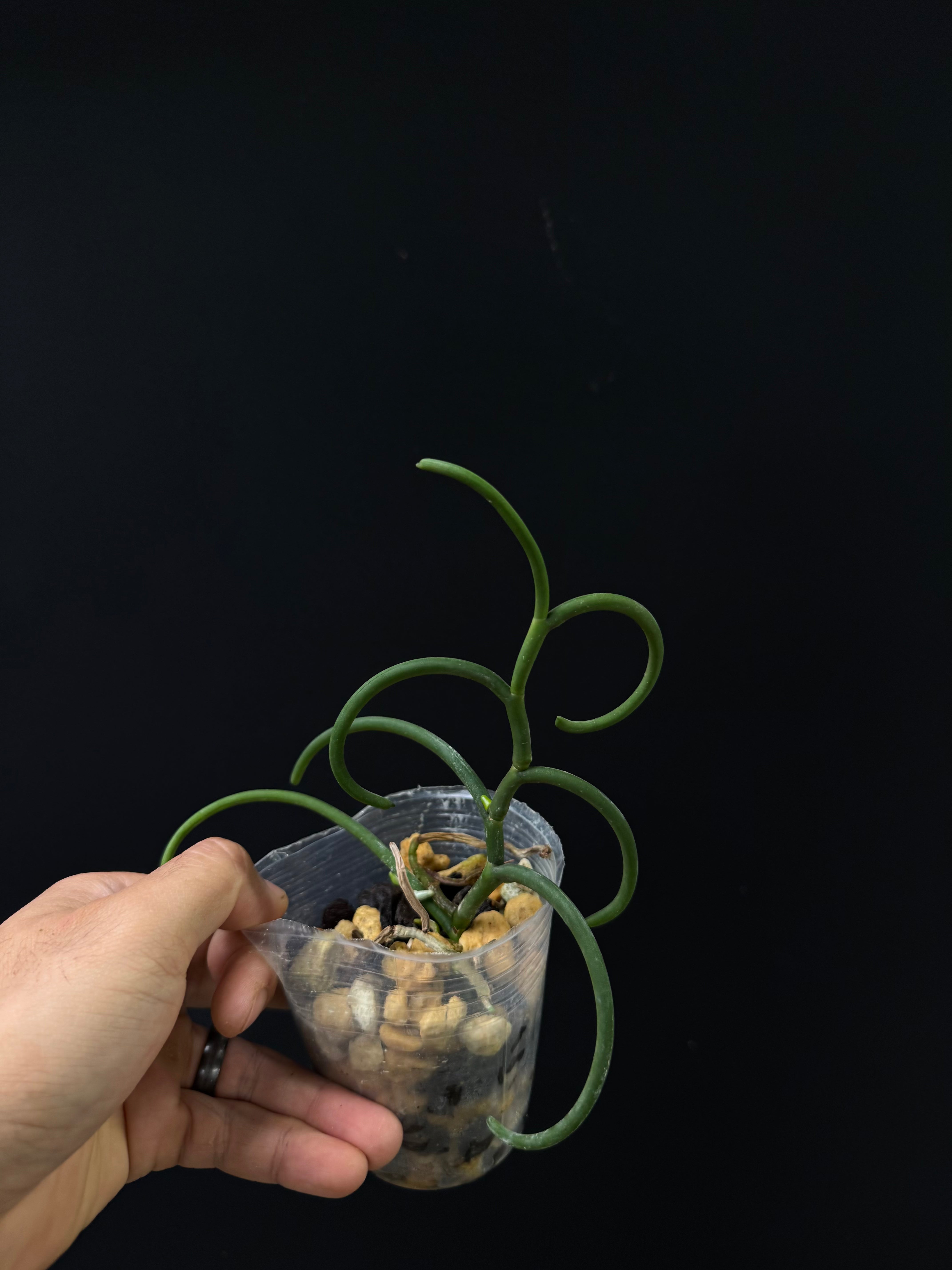
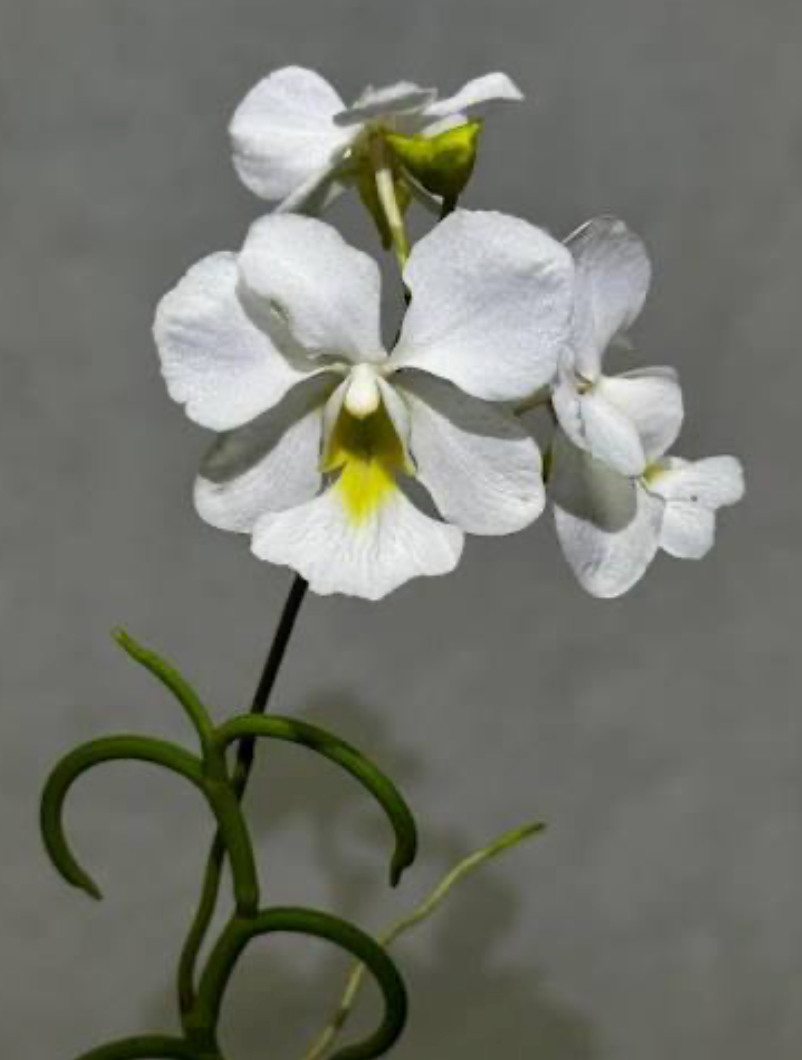
Papillonanthe teres var. 'olympic rings'
Papilionanthe teres ‘Olympic Rings’
Papilionanthe teres ‘Olympic Rings’ is an exceptionally unusual terete leaf orchid selected for its looping, curled foliage that naturally forms circular and spiral shapes along the upright stem. Rather than producing the flat strap shaped leaves associated with many orchids, this plant develops narrow cylindrical leaves that twist into the distinctive rings responsible for its name.
The result is a plant that looks sculptural even when it is not flowering. As new growth continues upward, additional looping leaves develop along the stem, creating an increasingly architectural specimen with maturity.
Papilionanthe teres was historically classified as Vanda teres, and the older name is still commonly encountered in orchid cultivation.
What You’ll Receive
One live Papilionanthe teres ‘Olympic Rings’ orchid.
Your plant will be carefully packed to help protect the unusual foliage, stem, roots, and active growing point during transit.
Plant Highlights
Distinctive looping and circular foliage
Narrow cylindrical terete leaves
Unusual sculptural growth habit
Upright monopodial growth
Warm growing tropical orchid
Thick aerial orchid roots
Can be grown in baskets, extremely open pots, or mounted
Interesting display plant even when not flowering
Light
Provide very bright filtered light.
Papilionanthe teres generally prefers considerably brighter conditions than many common indoor orchids. Strong light is important for compact growth, sturdy stems, and flowering as the plant matures.
Gentle direct morning sun can be beneficial. Plants can tolerate increasing amounts of direct sunlight when properly acclimated, but avoid suddenly moving a shade grown plant into intense afternoon sun.
Gradually increase light exposure to prevent scorching.
Water
Water thoroughly and then allow the roots to approach dryness before watering again.
During warm active growth, plants grown in very open media or baskets may require frequent watering because the roots dry quickly.
The goal is to provide plenty of moisture followed by rapid drainage and excellent airflow.
Avoid keeping the roots constantly wet or surrounded by stagnant media.
Humidity
Moderate to high humidity is preferred.
Humidity around 60 to 80 percent works well when combined with strong airflow.
Plants grown mounted or with extensively exposed aerial roots may appreciate higher humidity because their roots dry much faster than orchids grown in enclosed containers.
Growing Media
Use an extremely airy, fast draining orchid mix.
Large orchid bark, charcoal, pumice, coarse perlite, lava rock, and other open materials work well.
Baskets and heavily slotted containers are especially suitable because they allow air to move freely around the root system.
This orchid can also be grown mounted when watering and humidity are sufficient.
Avoid dense traditional potting soil.
Temperature
Warm conditions are preferred, generally around 65 to 90°F.
Papilionanthe teres performs especially well with consistently warm daytime temperatures and good air movement.
Protect from frost and prolonged exposure to cold temperatures.
Airflow
Strong but gentle airflow is important.
The combination of warmth, regular watering, and exposed roots works best when plenty of fresh air can circulate around the plant.
Good airflow allows the roots to dry appropriately between waterings and helps prevent stagnant conditions.
Fertilizer
Feed lightly and regularly during active growth using a diluted balanced orchid fertilizer.
Consistent weak feeding is generally preferable to occasional strong fertilizer applications.
Periodically rinse the roots and growing media thoroughly with plain water to reduce fertilizer salt buildup.
Growth Habit
Papilionanthe teres is a monopodial orchid, meaning it continues growing upward from a central stem rather than producing pseudobulbs.
Roots can emerge along the lower and intermediate portions of the stem as the plant grows.
The species naturally develops cylindrical terete foliage, while ‘Olympic Rings’ is distinguished by leaves that curl and loop into pronounced circular shapes.
Older plants can become taller over time and may benefit from a stake, trellis, or other support.
About the Olympic Rings Foliage
The foliage is the defining feature of this selection.
Individual leaves develop into loops, curves, and spirals rather than extending outward in a straight line. Some may form nearly complete circles while others develop more open curves.
The exact shape of every leaf will not be identical, which contributes to the unusual appearance of the plant as additional growth develops.
Avoid forcing or manually bending the foliage into position. The rings are produced naturally as the leaves develop.
Aerial Roots
Exposed aerial roots are completely normal.
Healthy roots may appear silvery gray when dry and turn greener after watering as the outer velamen absorbs moisture.
Do not remove healthy roots simply because they grow outside of the container. These roots actively absorb moisture and nutrients and are an important part of the orchid’s natural growth habit.
Blooming
Mature Papilionanthe teres can produce flower spikes from the stem once the plant has developed sufficient size and maturity.
High light is particularly important for encouraging flowering. Plants maintained in conditions that are too shaded may continue producing vegetative growth without blooming.
Flowering time and quantity depend on maturity, light, temperature, nutrition, and overall growing conditions.
Mature Growth
This is an orchid that becomes increasingly interesting as it grows.
The upright stem continues extending while new circular leaves and aerial roots develop along the plant, eventually creating a much larger sculptural specimen.
Papilionanthe teres ‘Olympic Rings’ combines the unusual cylindrical foliage of a terete orchid with naturally looping growth, making it one of those plants that hardly needs flowers to get attention.
The bloom reference photo shown in this listing was sourced from an online image search and is not our own photograph.
-------
⚠️ Important Shipping Notes
We take great care to ensure your plant arrives safely:
• We ship every Monday and Tuesday to minimize weekend delays.
• We check destination weather on Sunday night and will add free insulation and heat packs when needed for safe delivery.
• If a plant arrives damaged, buyers must provide an unboxing video within one hour of delivery.
(We cannot be responsible for plants left outside, delayed opening, or packages exposed to heat/cold.)
🌟 Perfect For:
• Rare plant collectors
• Fans of unusual foliage
• Terrarium or greenhouse keepers
• Anyone building a unique indoor jungle