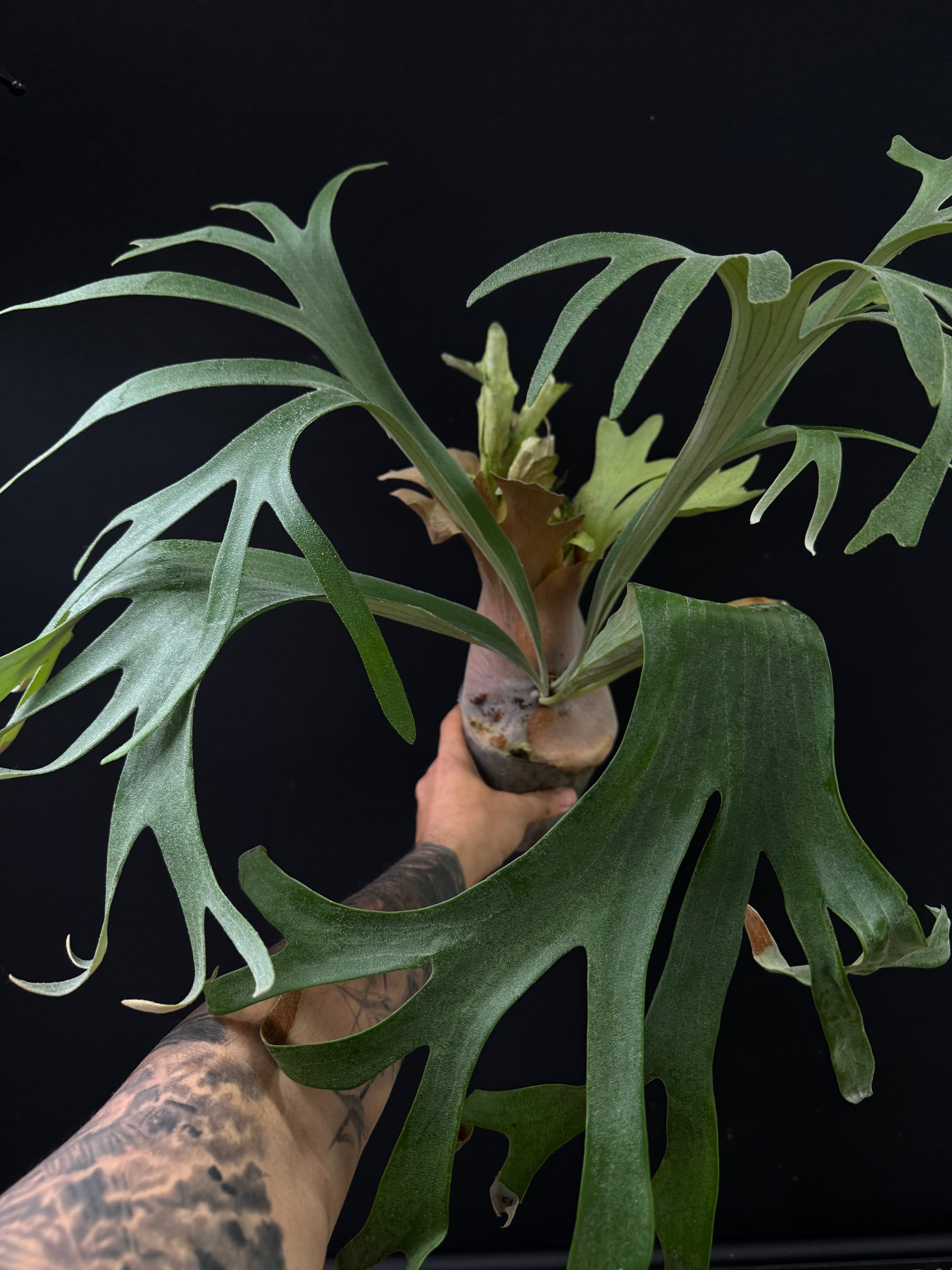
Platycerium SS Foong
Platycerium ‘SS Foong’
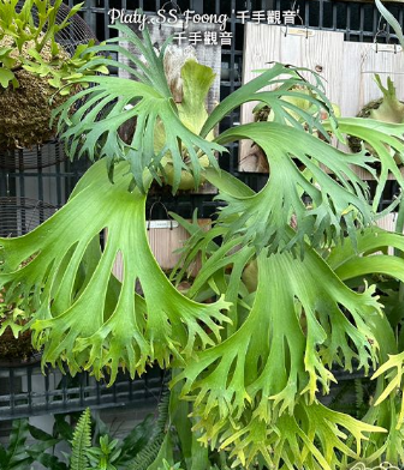
Second Picture is of parentage
Platycerium ‘SS Foong’ is an exceptional cultivated staghorn fern recognized for its incredibly dense branching, architectural shield fronds, and dramatic mature silhouette. As the plant develops, its fertile fronds divide repeatedly into numerous narrow fingers, eventually creating the intricate, almost hand-like structure that makes mature SS Foong immediately recognizable.
Rather than relying on exceptionally long fertile fronds for its impact, SS Foong creates its appearance through branching and density. Mature fertile fronds can fork again and again toward their ends, producing a broad crown filled with dozens of individual tips. When viewed from the front, an established specimen can resemble a mass of outstretched hands radiating from the plant.
This highly divided growth has led to SS Foong being known in parts of Asia as the “Thousand Hand” staghorn, referencing the many branching tips produced by mature specimens.
The cultivar was developed by renowned Malaysian Platycerium grower S.S. Foong, whose breeding and selection work has produced several distinctive Platycerium cultivars. SS Foong remains one of the forms most closely associated with his work.
Shield Fronds: Shield fronds form a substantial, structured crown around the root system. Fresh shields emerge green and gradually expand upward and outward before naturally aging to tan or brown. Successive shields layer over older growth and create an increasingly architectural base as the plant matures.
Fertile Fronds: The signature feature of SS Foong. Mature fertile fronds develop extensive repeated branching, dividing into numerous slender fingers toward their ends. The degree of branching becomes increasingly dramatic as the plant reaches maturity and is one of the primary characteristics used to recognize this cultivar.
Mature Appearance: Full, highly branched, and sculptural. Older specimens can develop an impressive crown of fertile growth with so many divisions that individual fronds visually overlap into a dense canopy.
Size: Medium. SS Foong develops into a substantial mounted specimen without necessarily producing the extreme overall dimensions seen in some of the largest Platycerium species. Its visual impact comes primarily from the density and complexity of its fertile growth.
Growth Habit: Epiphytic, upright to spreading, with fertile fronds extending outward from a layered central crown.
Coloration: Green to silvery green depending on growing conditions. Fine natural trichomes may give portions of the foliage a soft or slightly frosted appearance.
Light: Bright indirect to very bright filtered light is ideal. Strong filtered light helps encourage sturdy, compact fertile growth and can contribute to better development of the characteristic branching.
Gentle morning sun can be beneficial once the plant has been acclimated. Protect from intense, unfiltered afternoon sunlight, particularly during very hot weather.
Water: Water thoroughly and allow the mounting material to partially dry before watering again. The root system should receive consistent moisture but should not remain permanently saturated.
Watering frequency will depend heavily on temperature, humidity, airflow, mount size, and the amount of sphagnum surrounding the roots. A plant grown in warm conditions with strong airflow may require significantly more frequent watering than one grown indoors.
Humidity: Moderate to high humidity is preferred. Approximately 50 to 80% works well when accompanied by good air circulation.
Higher humidity can support vigorous growth, but stagnant wet conditions should always be avoided.
Airflow: Good airflow is extremely beneficial. Because mature SS Foong can develop a dense crown with numerous overlapping fertile branches, consistent air circulation helps moisture evaporate from around the growing point and shields.
Temperature: Warm tropical conditions are preferred. Approximately 70 to 85°F provides an excellent range for active growth. Protect the plant from frost, prolonged cold, and especially cold conditions combined with saturated growing media.
Growing Media: Use a loose, breathable epiphytic medium. Sphagnum moss is especially well suited for mounted plants because it provides moisture retention while still allowing airflow when kept loose.
Avoid compressing sphagnum tightly around the root system. Dense conventional potting soil is not recommended.
Mounting: Mounting is highly recommended and allows SS Foong to develop its characteristic mature structure. Wood, cork, or another durable mounting surface works well.
Leave adequate room above and around a juvenile plant. Although young specimens can appear relatively simple, mature plants develop a much wider crown as successive fertile fronds begin producing extensive branching.
Feeding: Feed lightly during active growth with a diluted balanced fertilizer. Regular weak applications are generally preferable to heavy feeding.
Occasionally flushing the mounting material thoroughly with clean water can help prevent fertilizer salts and mineral buildup around the roots.
Growth Rate: Moderate to relatively vigorous once established. Young plants may take time to begin showing the mature branching pattern, but established SS Foong can produce substantial new growth under warm, bright conditions.
Maintenance: Moderate. The cultivar is generally manageable when provided with appropriate light, warmth, watering, and airflow. As the crown becomes increasingly dense, paying attention to airflow and avoiding excessive water around the active growing point becomes especially important.
Best Display: Mounted vertically at approximately eye level or slightly above. This position allows the layered shield crown and highly divided fertile growth to be appreciated from both the front and sides.
Additional Notes: Juvenile SS Foong plants may look considerably simpler than mature specimens. The extreme branching associated with the cultivar develops progressively as the plant matures, and new generations of fertile fronds can become increasingly complex.
Growing conditions can also influence its appearance. Adequate light, nutrition, and overall plant vigor help mature fertile fronds express the dense branching for which SS Foong is known.
Older shield fronds naturally turn brown as new shields develop. These shields are not dead material that needs to be removed. They remain part of the plant's protective structure and should generally be left undisturbed.
Any silvery or fuzzy coating visible on the foliage is also natural. These fine trichomes should not be wiped or polished from the fronds.
Platycerium ‘SS Foong’ becomes dramatically more impressive with age. What begins as a relatively straightforward young staghorn can eventually develop into a dense crown filled with finely divided fertile fronds, creating the extraordinary “thousand hand” appearance associated with mature specimens.
For growers who appreciate Platycerium for their sculptural mature forms, SS Foong is especially rewarding because its defining characteristics become more pronounced with each stage of development.
----------
⚠️ Important Shipping Notes
We take great care to ensure your plant arrives safely:
• We ship every Monday and Tuesday to minimize weekend delays.
• We check destination weather on Sunday night and will add free insulation and heat packs when needed for safe delivery.
• If a plant arrives damaged, buyers must provide an unboxing video within one hour of delivery.
(We cannot be responsible for plants left outside, delayed opening, or packages exposed to heat/cold.)
🌟 Perfect For:
• Rare plant collectors
• Fans of architectural foliage
• Terrarium & vivarium setups
• Anyone building a unique indoor jungle