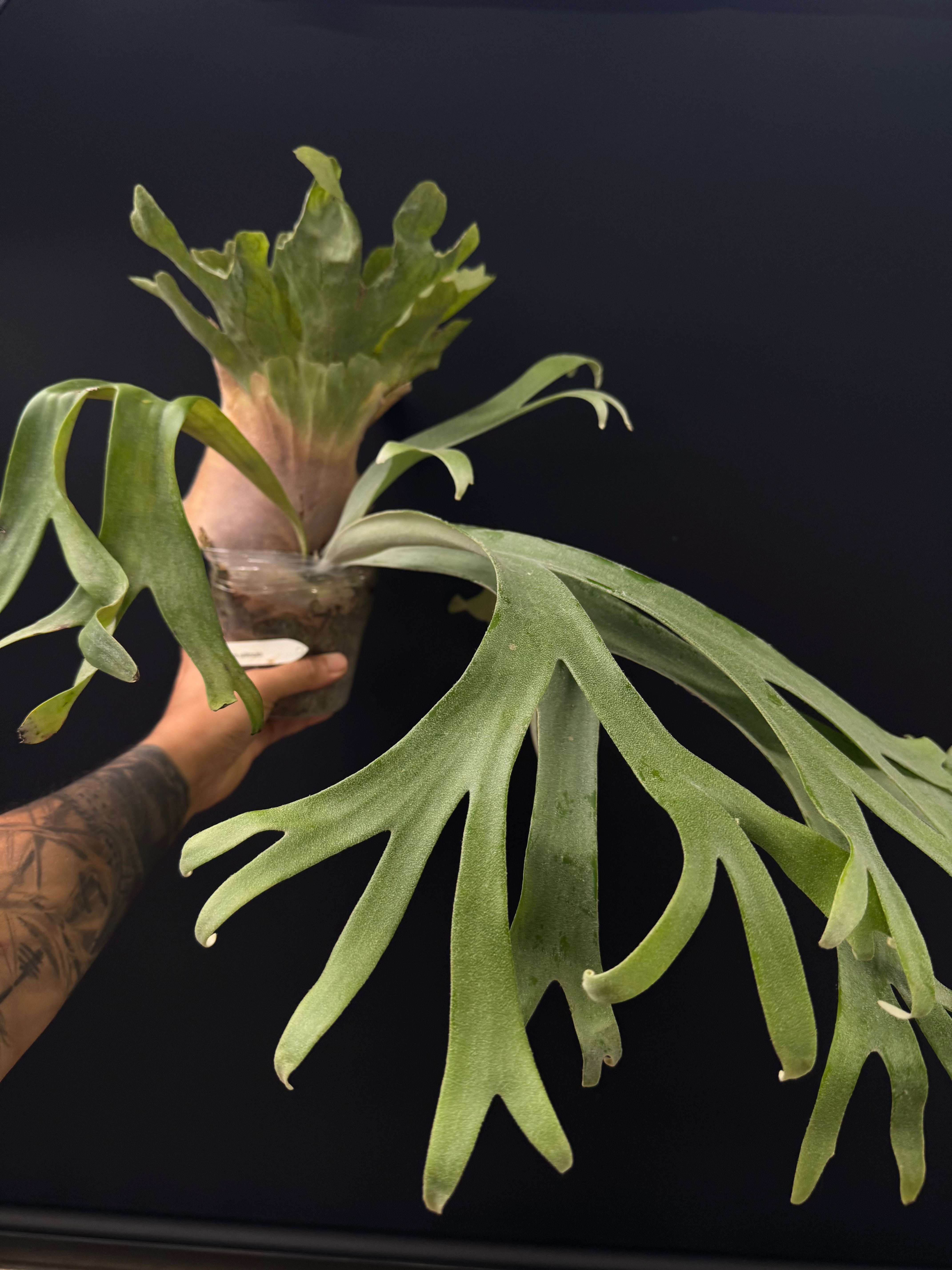
Platycerium willinckii
Platycerium willinckii
Platycerium willinckii is a striking staghorn fern known for its long, narrow fertile fronds, silvery foliage, and dramatic cascading growth. As the plant matures, its fertile fronds repeatedly fork into slender antler-like segments that can extend outward and downward, creating the flowing silhouette that makes this species so recognizable.
Native to Indonesia, particularly Java, Platycerium willinckii grows naturally as an epiphyte attached to trees. Its roots are adapted to an airy environment with excellent drainage, while the foliage receives bright light, warmth, humidity, and regular airflow.
One of the standout characteristics of this species is its coating of fine natural trichomes. These tiny hairs give the foliage a soft silver to gray-green appearance and help protect the plant from intense light and moisture loss. The trichomes are a natural part of the plant and should not be wiped from the fronds.
Shield Fronds: Sterile shield fronds grow around the root system and mounting surface, gradually creating a layered protective base. New shields emerge green before naturally aging to tan or brown. Older brown shield fronds should generally remain attached.
Fertile Fronds: Long, narrow, repeatedly forked, and eventually cascading. Mature plants can produce highly divided fronds with numerous slender tips, giving the plant an elegant and dramatic appearance.
Coloration: Green to silvery green, often becoming noticeably more silver under brighter growing conditions.
Growth Habit: Epiphytic, spreading, and cascading. Mature plants can develop a substantial width and length when given enough room to grow.
Light: Bright indirect to very bright filtered light is ideal. Platycerium willinckii generally appreciates strong light, which can encourage compact growth and stronger silver coloration. Gentle morning sun can be beneficial once acclimated, but intense afternoon sun should be avoided.
Water: Water thoroughly and allow the mounting material to partially dry before watering again. Avoid keeping the root mass constantly saturated. Mounted plants may need more frequent watering depending on temperature, humidity, airflow, and the amount of sphagnum used.
Humidity: Moderate to high humidity is preferred. Approximately 50 to 80% works well when paired with good airflow.
Airflow: Good air circulation is important. Moving air helps the root area dry appropriately between waterings and reduces the risk of excess moisture remaining around developing shield fronds.
Temperature: Warm conditions are preferred, generally around 70 to 90°F during active growth. Protect from prolonged cold and avoid keeping the root system saturated during cooler temperatures.
Growing Media: Use an airy epiphytic setup. Loose sphagnum moss around the root mass works well for mounted plants. Avoid dense traditional potting soil or tightly packed media.
Mounting: Mounting is highly recommended. Wood, cork, or another breathable surface allows the shield fronds to develop naturally while giving the fertile fronds plenty of room to extend and cascade.
Feeding: Feed lightly during active growth with a diluted balanced fertilizer. Regular weak feeding is generally preferable to heavy applications. Periodically flushing the mounting material can help prevent mineral and fertilizer salts from accumulating.
Maintenance: Moderate. Once established, Platycerium willinckii can be a vigorous grower when provided with bright light, warmth, good airflow, and an appropriate watering cycle.
Best Display: Mounted vertically where the long fertile fronds have plenty of space to hang freely. Mature plants are especially impressive displayed on a wall or elevated mounting board.
Additional Notes: Platycerium willinckii is highly variable, and different forms can develop noticeably different mature appearances. Some produce exceptionally long, narrow fertile fronds, while others may be more compact, heavily branched, silver, or upright depending on genetics and growing conditions.
The brown shields that develop around the base are a normal part of the plant's growth and should not be removed simply because they have lost their green coloration. These older shields continue to protect the root system and help form the structure of the plant.
With bright filtered light, warm temperatures, good airflow, and a proper wet-to-drier watering cycle, Platycerium willinckii can develop into an impressive mounted specimen with layers of shields and long, flowing silver antlers.
----------
⚠️ Important Shipping Notes
We take great care to ensure your plant arrives safely:
• We ship every Monday and Tuesday to minimize weekend delays.
• We check destination weather on Sunday night and will add free insulation and heat packs when needed for safe delivery.
• If a plant arrives damaged, buyers must provide an unboxing video within one hour of delivery.
(We cannot be responsible for plants left outside, delayed opening, or packages exposed to heat/cold.)
🌟 Perfect For:
• Rare plant collectors
• Fans of architectural foliage
• Terrarium & vivarium setups
• Anyone building a unique indoor jungle